


Rice Digital Learning’s architecture of academic support is designed to assist Rice faculty with navigating and incorporating AI in teaching and learning.
At Rice Digital Learning & Strategy, we are collaboratively building a future where education connects and empowers our faculty, staff, and students to achieve their full digital potential. Our strategic plan calls for us to “come together to identify and create innovative, solutions-driven applications of AI.” Bringing that vision to life requires us to continually evolve, anticipating foundational shifts in higher education and the changing ways we interact with technology.
Across Rice University, faculty, staff, students, departments, schools, and programs are already actively integrating AI into their daily work. Our work ranges from generative AI in course design and research workflows to automation of routine.
Yet, adoption without intentional guidance creates risks of systemic confusion. As generative AI becomes increasingly accessible, our university is grappling with critical questions that strike at the very heart of the academic landscape:
- Course Design & Assessment: What should belong in a syllabus when AI-powered tools are available? Which assignment types still effectively measure student learning?
- Online Learning & Teaching: How should online course design evolve when browser-based shortcuts are easier to access than ever?
- Administrative Efficiency: How can we safely streamline administrative work within campus support service offices without losing human connection?
- Student Responsibility: When, and how, can students ethically use AI for their coursework under the Rice honor code?
To begin to address these questions, Rice Digital Learning (RDL) has gathered a unified, cross-campus academic resource: The AI-in-Education Support Team. The coordinated framework brings together internal RDL staff and dedicated individuals from across the campus to provide consistent guidance, distribute expertise, and assist with shifting AI integration from a reactive posture into an intentional strategy.
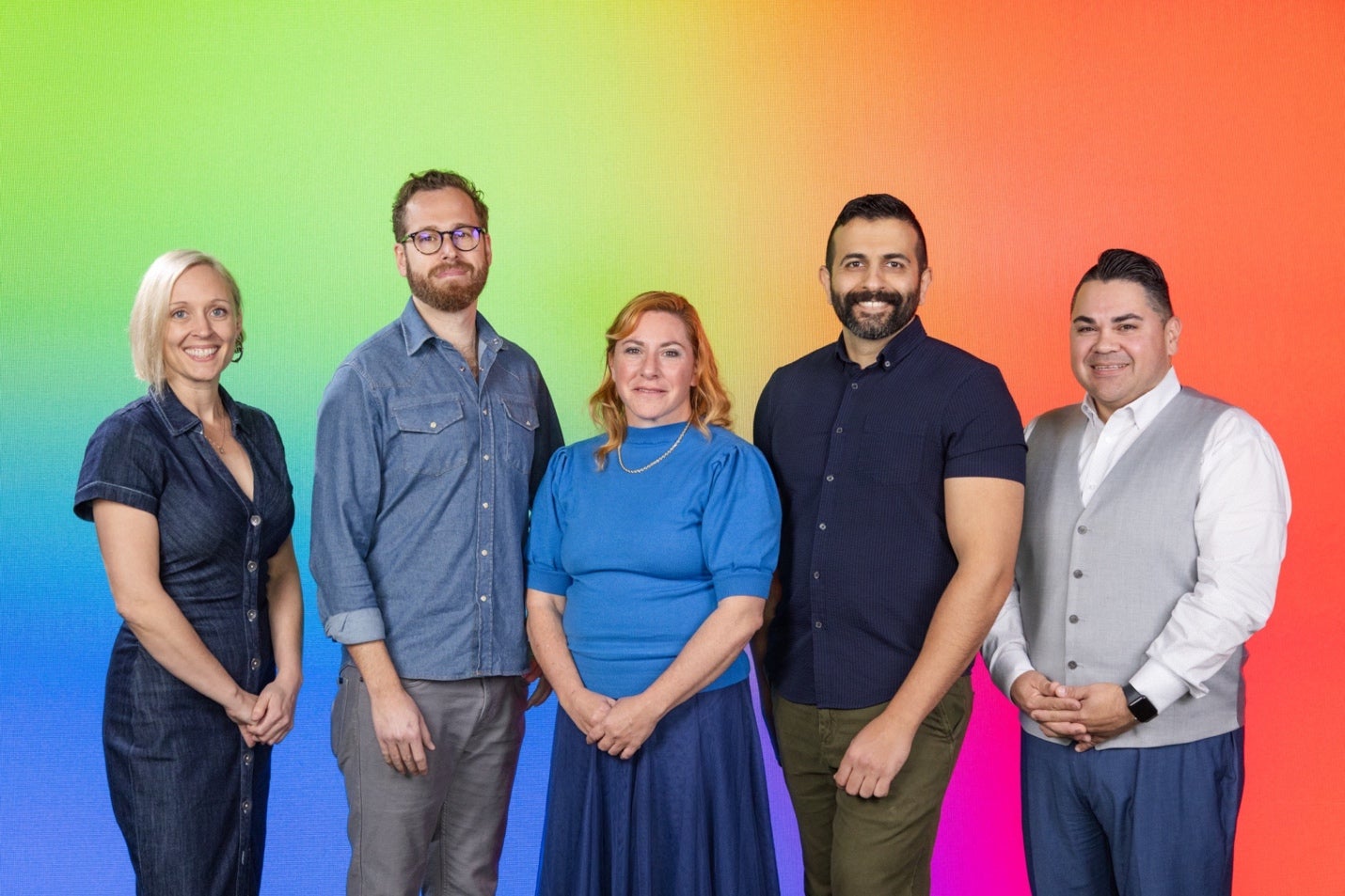
Meet the Initial AI-in-Education Support Team

Dana Santoscoy
Dana joined Rice in 2026 and her role is to support a university-wide Community of Practice on AI. Grounded in a polycentric philosophy of "human-centered intelligence," her approach reframes the standard narrative from simply keeping "humans-in-the-loop" to keeping humans in the group and computers in the loop. She supports a comprehensive maturity model for Rice faculty with various starting points, from those actively piloting advanced classroom tools to those still clarifying what responsible use looks like in their discipline context.
Her role serves as a model highlighted in Joshua Kim's Inside Higher Ed "Featured Gig" column. This framework outlines an outward-facing, highly collaborative strategy built on key parameters:
- Cross-Organizational Liaison Work: Functioning as a bridge connecting school deans, department chairs, the Center for Teaching Excellence (CTE), IT structures, OpenStax networks, and the Office of Transformational Technology and Innovation (TTI).
- Managing Innovation Pilots: Serving as the direct co-designer and manager of faculty-focused instructional pilot programs to identify high-leverage generative AI use cases across the academic landscape.
- Fostering a Culture of Experimentation: Actively building and nurturing a campus-wide culture of thoughtful experimentation around AI-powered pedagogy.
- Lead Strategic Communications: Serving as the primary communicator and baseline translator for Rice's broad academic AI initiatives.
When to Contact Dana: You need assistance drafting or revising course AI policies (what is allowed, what is not, and what students must disclose); you want to shape an active instructional pilot or classroom experiment; or you are exploring how a conceptual idea fits into the Accelerating Responsible AI For Education pathway.

Emily McBroom
Emily’s role as a course designer was expanded to include AI engagement, positioning her work at the intersection of AI implementation and day-to-day instructional design. Her responsibilities now include supporting the RDL team’s AI upskilling and advancing pedagogical integration of AI across learning experiences.
In addition, Emily researches, evaluates, and pilots emerging AI-driven instructional design methodologies while collaborating with leadership to translate faculty-driven AI initiatives into digital learning environments. A central focus of her work is reframing conversations around AI from unreliable AI detection tools and toward the development of visible, personalized assessment architectures that support student learning and engagement.
Recognizing that browser-based extensions make it unusually easy to shortcut digital coursework, Emily helps faculty build contextualized assignments tied strictly to localized lectures and course environments, making it significantly harder for generic AI models to "hack the code" without authentic student engagement.
When to Contact Emily: You want to evaluate online or hybrid course elements most vulnerable to automated shortcuts; you need to transition traditional assessments into personalized learning activities; or you want to deploy specialized AI tools that help faculty build courses, grade efficiently, and draft innovative lesson plans.

Seth Tyger
Seth provides practical, structural design leadership, helping faculty establish transparent boundaries around AI in teaching. His focus centers on helping instructors define and convey precisely what students can and cannot do in a manner that aligns with overall learning outcomes rather than tool availability. Seth also oversees RDL’s course design team.
When to Contact Seth: You are looking to write or refine structural AI language for syllabi and assignments; or you want to build durable course activities that verify student learning goals remain uncompromised when technology tools are present.

Ali Garib
Ali supports NSCI faculty in integrating emerging digital technologies to reimagine pedagogy in ways that are experiential, student-centered, and innovative. His research investigates how experiential learning shapes students’ engagement with AI as active users and independent thinkers.
Ali encourages frameworks built around metacognitive thinking and experiential learning, where students think about their thinking process, remain accountable for their learning, document how they used the tools, reflect on their agency as learners, and make their invisible learning steps visible. As a faculty member within the School of Natural Sciences, Ali’s extensive research on digital technology integration and responsible use across the curriculum has been featured in The Rice Thresher and published in prominent scholarly venues, including Computers and Composition, the TPACK Handbook for Educators, and Project-Based Learning for Educators. He also serves on the editorial review board of the Journal of Digital Learning in Teacher Education. Ali’s work contributes to global scholarship on emerging educational technologies..
He encourages approaches that keep students accountable for thinking, such as documenting how AI was used, reflecting on what changed, and making the learning process visible rather than hidden.
When to Contact Ali: You need guidance on AI integration specifically within STEM contexts; you want to design assignments that integrate AI with clear boundaries; or you want to join faculty-level discussions on how emerging tech is reshaping higher education and faculty practices.

Daniel Villanueva
In addition to steering core marketing and communication strategies, Daniel partners with Technology Solutions & Services and can coordinate partnerships between other campus partners to help provide advanced training initiatives for functional administrative units across campus.
Leveraging his extensive experience in enrollment management, higher education administration, and student life, he can assist with coordinating campus experts to deliver in-depth, hands-on AI training for staff who work directly with students outside the classroom.
Furthermore, Daniel applies a specialized communications lens to the ecosystem, translating complex policy into findable, plain-language guidance to ensure that institutional lessons learned are effectively shared and reused across contexts.
When to Contact Daniel: You want to coordinate targeted AI training or hands-on workshops for an operational or student-facing administrative unit; you need assistance turning a localized pilot into a clear, usable guide; you need assistance with leveraging AI with data analyzation, or you want to market and communicate institutional outcomes to broad audiences in an easily understandable format.
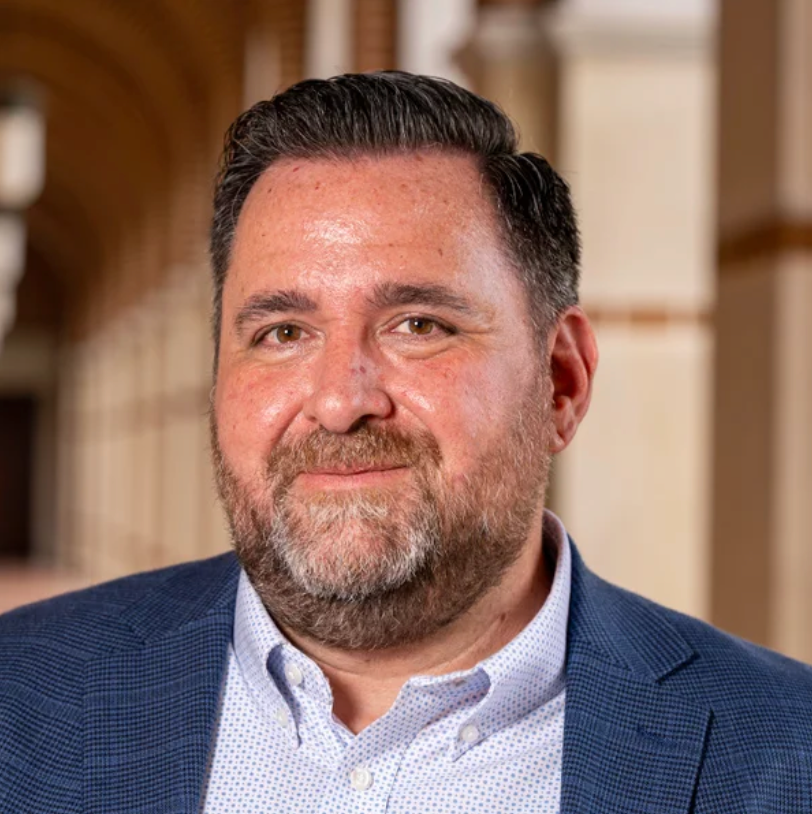
Shawn Miller
Shawn helps steward Rice’s comprehensive digital learning strategy and the cross-campus partnerships that support teaching and learning across all modalities.
Rather than viewing artificial intelligence as an isolated or temporary trend, he positions AI as a permanent structural shift—recognizing that it is rapidly becoming the digital technology of education for the future. Shawn plays a pivotal role in connecting localized AI-in-education initiatives with broader university pathways, serving as a primary driver of alignment when high-leverage projects require visibility across campus or cross traditional unit lines.
Shawn’s leadership on Rice’s AI Advisory Committee focuses heavily on teaching, learning, and professional staff development. His strategic approach was demonstrated in 2024 when Rice was selected to participate in the prestigious AAC&U Institute on AI, Pedagogy and the Curriculum. In addition, Shawn will continue to serve as faculty for the 2026-27 Institute on AI, Pedagogy, and the Curriculum.
Leading a cross-campus team that unified the Center for Teaching Excellence (CTE), the Program in Writing and Communication (PWC), the Dean of Undergraduates, and the office of Teaching and Learning Technologies (TS&S), Shawn helped architect Rice's "centrally supported but distributed" roadmap for thoughtful technology adoption across the entire institution.
Shawn recently appeared as a guest on Rice’s Beyond The Hedges podcast, where he discusses how digital tools are actively reshaping higher education and details what Rice is discovering as these models evolve. Listen to the episode through the Beyond the Hedges Podcast Network.
When to Contact Shawn: You need university-level context on how digital learning and AI align with Rice's overarching teaching and learning priorities; you want to connect a localized instructional concept to broader campus-wide AI pathways and collaborators; or your initiative spans multiple schools, academic programs, or institutional audiences and requires high-level coordination.
Building a Campuswide Culture of Experimentation
The addition of these coordinated roles and distributed support structures reflects a robust, centrally supported but distributed roadmap for thoughtful technology adoption.
"Our goal is to lead in responsible AI education, and that means going far beyond just technology adoption," says Shawn Miller, Associate Provost for Digital Learning and Strategy. "We’re committed to developing cutting-edge curricula that weave AI and its ethical dimensions into every discipline, building robust partnerships with industry and, most importantly, empowering our world-class faculty.
The Assistant Director of AI and Education serves as a key architect of this ecosystem co-designing innovation pilots, managing collaborative pathways, and helping build a campuswide culture of experimentation around AI-powered pedagogy."
Rice’s commitment to this structural future is anchored in practical execution. In partnership with the Provost’s Office, Rice Digital Learning has announced that over 45 classroom innovation projects have been funded under the Accelerating Responsible AI for Education Initiative. This cross-campus cohort, which connects back to Rice's strategic participation in the national AAC&U Institute on AI, Pedagogy and the Curriculum, enables faculty to seamlessly rebuild courses, test boundaries in real time, and learn from one another by building an active community of practice within their respective schools.
The Distributed Support Blueprint: Where to Start Today
Because artificial intelligence intersects with multiple dimensions of university life, support resources are intentionally distributed across campus partners. Depending on your immediate instructional or operational constraints, use this verified baseline directory to locate your optimal starting point, or email digital@rice.edu for direct routing.
AI Resources & Support at Rice University
| Category | Unit / Resource | What They Support | Primary Audience | When To Start Here | Link |
|---|---|---|---|---|---|
| University AI Hub & Guidance | Responsible AI @ Rice (Rice AI Hub) | Campus guidelines, training listings, events, resources, pathways to shared initiatives | Faculty, staff, students | You want a campus starting point for responsible AI resources | responsibleai.rice.edu |
| University Digital Learning Partner | Rice Digital Learning & Strategy | Digital learning strategy + faculty partnership; AI-in-education resources | Faculty, campus admins | You want a starting point for AI-in-teaching/course design support | https://digital.rice.edu/ai-education |
| Teaching & Learning (Pedagogy) | Center for Teaching Excellence (CTE) | Teaching consults, syllabus guidance (incl. AI language) | Faculty | You want pedagogy-first support and course policy language | cte.rice.edu/resources/syllabus |
| Teaching Tools (LMS + EdTech) | TS&S Teaching and Learning Technologies (Canvas & tools) | Canvas, Kaltura, supported teaching tools, training & help | Faculty, students | You need Canvas/tool support or integrations | teaching.rice.edu/canvas |
| Policy / IT Guidance | TS&S AI Usage Guidance | Guidance for responsible AI use (not new policy; points to existing policies) | Faculty, staff, students | You need institutional guidance for AI tool use | tss.rice.edu/ai-usage-guidelines |
| Security & Procurement | TS&S Information Security Office (AI service guidelines) | Security review before licensing new AI services/tools | Programs, schools, departments considering new tools | You’re evaluating/licensing an AI vendor or tool | https://tss.rice.edu/ai-usage-guidelines |
| Research & Computing | Center for Research Computing (CRC) | Research computing infrastructure, workshops | Faculty, researchers, grad students | You need compute/infrastructure or research workflows | crc.rice.edu |
| Libraries & Research Practice | Fondren Library (AI data workshops) | Research support + workshops (incl. genAI tool literacy) | Students, faculty, staff | You want research skills support or AI/data workshops | library.rice.edu/services/workshops |
| Academic Integrity | Rice Honor Council AI Policy | Baseline academic integrity policy; course policies may be stricter | Students, faculty | You need the baseline academic policy | honor.rice.edu/ai-policy-information |
| Staff / Operational Enablement | Transformational Technology & Innovation (TTI) | Staff-facing AI trainings + operational AI enablement | Staff, faculty, departments | You want AI training workflows or operational support | https://rice.mediaspace.kaltura.com/category/TTI+Training/382847563 |
| School-Based Support | Rice Business ITDS (Instructional Technology & Design Services) | School-level advising, tech + design services for Business | Rice Business faculty/students | You’re teaching in Rice Business | business.rice.edu/EdTech |
| AI Research & Community | Ken Kennedy Institute | AI & computing research community; seminars, convenings | Faculty, researchers, students | You want AI research connections/events | kenkennedy.rice.edu |
| Data Science / Applied AI | Rice D2K Lab | AI/data science courses, workshops, applied projects | Students, faculty, partners | You want applied AI/data learning opportunities | d2k.rice.edu |
| Staff / HR Enablement | WorkDNA (TTI) | AI tool for documenting job responsibilities and skills | Staff | You want structured job documentation support | https://ia.rice.edu/work-dna-overview |
Shaping the Next Chapter of Innovation Together
The addition of the new positions, coordinated efforts, and distributed support structures reflects the university's continued investment in academic excellence, responsible pedagogy, and student agency. Their combined leadership will accelerate our efforts to design the future of learning, advancing Rice's position as a leader in thoughtful AI adoption and human-centered design.
If your school, department, lab, center, or program is currently developing AI-related teaching resources, specialized workflows, or operational pilots, we want to help make it easier for others at Rice to find, adapt, and learn from your experience.
We are excited to work alongside our world-class faculty and campus partners as we shape this next chapter together.
Reach out to the AI-in-Education Support Team today at digital@rice.edu to identify your optimal next step, coordinate local unit training, or discuss how your team's breakthroughs can be shared through central campus channels like the Rice AI Hub.